Who Uses Machine Translation
Industries Embracing Machine Translation
Have you ever wondered what the driving forces of the industry behind machine translation (MT) are? The global markets are continuously growing, requiring businesses to perform translation as rapidly and efficiently as possible across different language barriers. Machine translation presents a scalable way of delivering content in various languages. This blog will identify and explore the primary industries that use MT to streamline communication and how it impacts them.
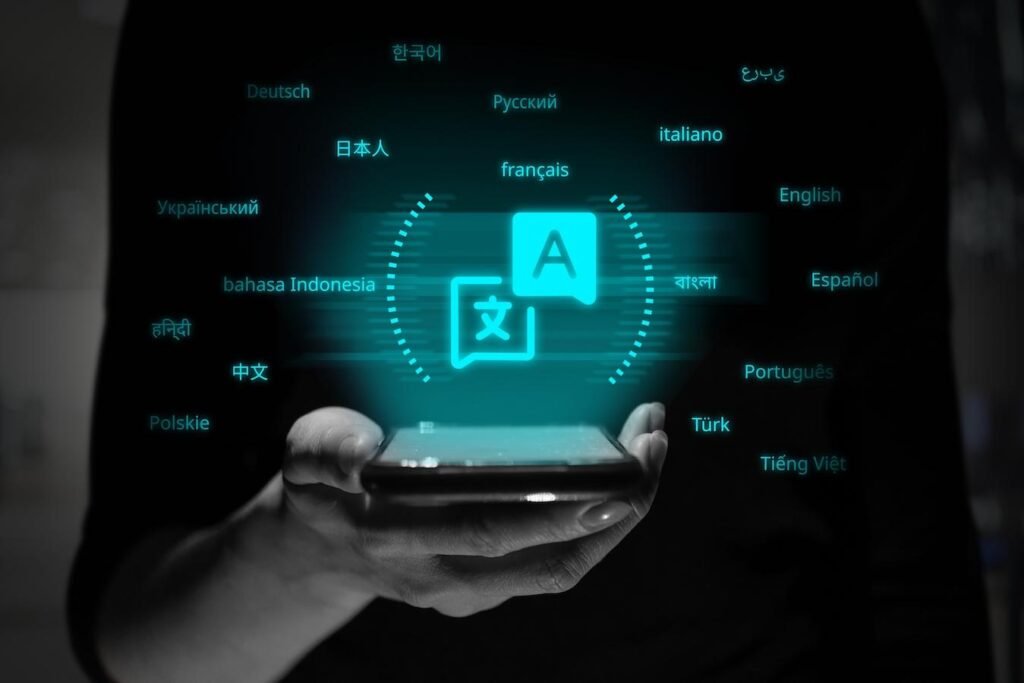
Why Machine Translation?
Speed
It translates, in volumes, at an unbelievable speed.
Cost-Effectiveness
In large projects, it is cheaper than human translation.
Scalability
Business ventures can make investments in new markets without language barriers.
Some sectors require efficient and rapid communication across various languages to remain competitive. Let’s consider which industries use more machine translation today.
E-Commerce
Applications of MT in E-Commerce
Product Description
Online marketplace giants such as Amazon and eBay significantly rely on MT to translate millions of product listings into various languages to enlighten customers about the product they are searching for.
Customer reviews
Translate customer feedback or reviews to provide localized experiences, thereby gaining the trust and engagement of potential buyers.
Help centers and FAQs
The self-driving translation of customer support materials allows companies to assist customers with their queries in different parts of the world without having to depend extensively on the workforces of massive human customer service teams.
Benefits
Rapid Market entry
Multiple language websites can be deployed without waiting for the long, laborious manual translation process, thereby speeding up international market entry.
Reduced operational costs
Automatic content translation saves a company from the high cost of maintaining vast teams of human translators.
Localized Customer Experience
MT enables retailers to present a local, seamless shopping experience for better customer satisfaction and loyalty.
Healthcare
Applications of MT in Healthcare
Patient Files
Hospitals and clinics use MT to translate forms and documents that patients use for check-in, personal medical history, prescriptions, and aftercare instructions to ensure one-on-one communication, especially in emergencies when response speed is of the essence.
Research Papers
Medical research is conducted in every corner of the globe, which means there is a need to share findings across linguistic lines. Machine translation bridges this gap by providing quick translations of articles in scientific publications and their faster release.
Clinical Trials
MT is used to translate documents regarding international clinical trials. These documents include consent forms, research protocols, reports, and more so that participants in various regions may understand the material and the researchers involved.
Benefits
Improved Patient Care
This ensures that patients understand their treatment plan, medicine, and any follow-up instructions regardless of the language.
Faster Research Distribution
Accelerate the cross-border distribution of medical research and findings worldwide, especially during health crises.
Cost Reduction
This saves on the translation costs of medical documents, especially for pharmaceutical companies conducting multi-country trials.
Legal Sector
Applications of MT in Legal
Contracts and Patents
International companies heavily rely on MT to translate complex legal documents, contracts, and patent applications into multiple languages.
Court Rulings and Case Files
Machine translation ensures quick rendering of draft translations of judgments, case files, and other court documents, enabling lawyers to get an idea of the content and then fine-tune the translation with human translation.
Benefits
Speed
It enables the rapid cross-border processing of large volumes of legal documents.
Efficiency
Translations of several languages given to lawyers automatically reduce the workload as they can quickly identify the correct information and pass that on to legal experts for fine-tuning.
Cost Savings
MT can eventually save costs on initial translation that would have otherwise been incurred, especially when dealing with significant and ongoing cases requiring large volumes of documents over time.
Technology and Software Development
Applications of MT in Tech
Software Localization
Companies like Microsoft and Google use MT to translate user interfaces so they can simultaneously enable new software updates in different languages.
User Guides and Documentation
Technology corporations rely on MT to speedily translate user manuals, FAQs, and help centers into many languages, enabling global customers to receive support in their native language.
Developer Collaboration
Open-source platforms like GitHub depend on MT for developer-to-developer communication across different developers' borders, which has fueled innovation.
Benefits
Rapid Market Expansion
MT enables technology companies to quickly expand their businesses into new markets through localized versions of their products.
Lower Translation Costs
MT reduces the cost of translating software into local languages, enabling start-ups and small tech firms to compete worldwide.
Global Collaboration
MT cuts across the language barriers among tech professionals, accelerating development and innovation.
Travel and Hospitality
Applications of MT in Travel and Hospitality
Booking Systems
Hotels and airlines use MT to translate booking details and confirmations so that travelers can better understand their reservations.
Menus and Brochures
Restaurants, hotels, and tourist destinations utilize MT services to provide multilingual menus, brochures, and information materials, thus making it more welcoming for visiting tourists.
Customer Service
MT allows for real-time translations during contact between customer service teams and international guests, making it easier and clearer.
Benefits
Increased Customer Satisfaction
Providing all the information in multiple languages would ensure the international guests' welcome and understanding.
Streamlined Operations
MT enables travel businesses to reach the largest number of people without maintaining a large, multilingual customer support group.
Faster Translations
New offers, seasonal campaigns, or service changes can easily be updated and translated into a client's language.
Education and E-Learning
Applications of MT in Education
Course Materials
The e-learning platforms, among which are Coursera and edX, use MT to translate textbooks, quizzes, and lecture notes to educate international students in several languages.
Subtitles and Video Translations
Online learning courses use MT to translate video lectures and add subtitles so that students can easily watch while in their native language.
Research and Collaboration
Academic institutions use MT to translate research papers, thus opening doors for collaboration between scholars from various nations.
Benefits
Expanding Educational Access
Through MT, institutions offer educational content in various languages across the globe.
Global Research Collaboration
Machine translation breaks the language barrier in academic research and creates global academic collaboration.
Government and Public Sector
Applications of MT in Government
Immigration Paper
MT translates visas, residence documents, and citizenship forms. Using MT, immigrants can conveniently maneuver the legal system.
Public Information Announcement
MT aids in translating public service announcements, and everyone receives such information, such as health advisories and new changes in law.
International Diplomacy
MT is used in diplomatic documents, trade accords, and official communication translation in international relations.
Benefits
Better citizen engagement
MT enables governments to communicate better with a multilingual population, thus ensuring that each person receives government services and information.
Faster Communication
Governments act quickly when crises arise, such as public announcements about significant health or safety issues, which are translated immediately using MT.
The Future of Machine Translation
The Hybrid Approach
Machine Translation
It processes high-volume content fast.
Human Review
Always up to the industry standard - all the cultural implications of the output product.